How Can You Find a Reliable Manufacturer of custom hydraulic hoses?
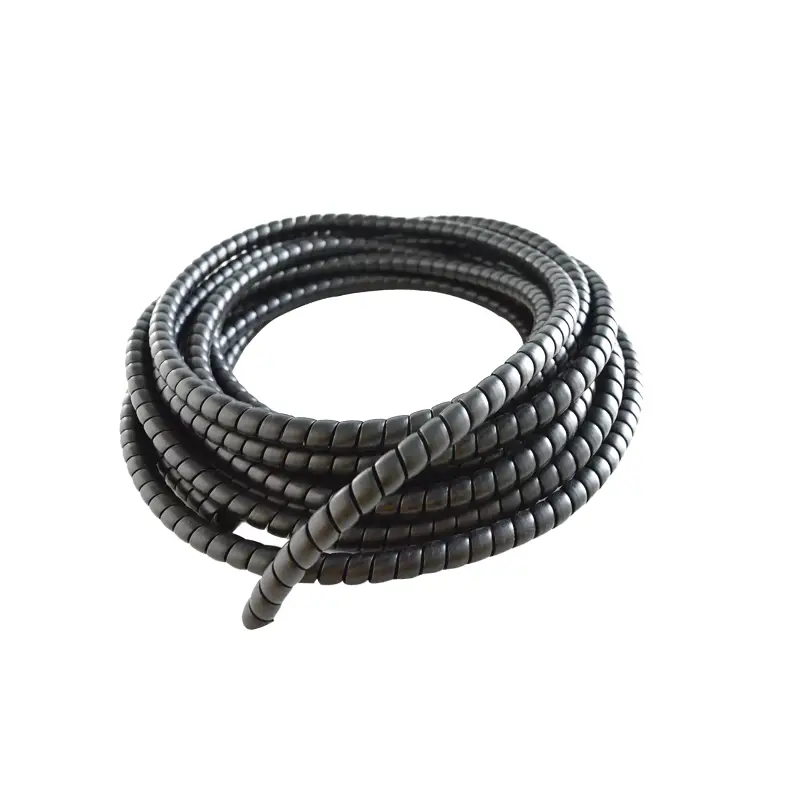
A reliable custom hydraulic hose manufacturer should be judged by documented pressure ratings, hose-and-fitting compatibility, crimp control, material traceability, test equipment, production repeatability, and delivery performance. Under SAE J517 test provisions, many hose types are proof-tested at 2 times maximum working pressure and burst-tested at 4 times working pressure; impulse requirements can reach 500,000 cycles depending on hose type. Buyers should also check minimum bend radius, fluid compatibility, fitting standards, batch records, ISO-based quality procedures, sample results, and realistic monthly capacity. A low quotation matters less when assembly variation causes leaks, rework, machine downtime, or repeated incoming inspection.
Start by giving the manufacturer an application specification rather than asking for a hose based only on inside diameter. A 1/2-inch hose carrying petroleum-based hydraulic oil at 3,000 psi has different construction requirements from a similarly sized return hose operating below 500 psi. The specification should state working pressure, expected pressure surges, fluid, operating temperature, hose length, bend radius, fitting style, thread, fitting angle, installation space, abrasion exposure, and annual quantity. Those details give the supplier enough information to select a hose family before assembly dimensions are discussed.
Pressure data should then be compared with published test requirements, not sales descriptions. SAE J517 documentation describes proof testing at 2× maximum working pressure for many hose types and a minimum burst level of 4× maximum working pressure, with specified exceptions. The same document describes impulse testing using four unaged assemblies, with required cycle counts varying by hose category; several constructions list 200,000, 400,000, or 500,000 cycles. A supplier quoting a 3,000 psi hose should therefore be able to identify its applicable standard, test method, pressure rating, and assembly limitations rather than provide only a catalog pressure number.
A hose with an acceptable working-pressure figure can still perform poorly when the reinforcement, fitting stem, ferrule, and crimp diameter were not designed and validated as one assembly.
Hose-and-fitting compatibility deserves separate review because assembling parts that physically fit together does not establish tested compatibility. Stem serration geometry, ferrule wall thickness, rubber hardness, reinforcement position, insertion depth, and final crimp diameter all affect retention and sealing. Ask the factory for a controlled crimp specification for every hose-and-fitting combination and check whether operators measure finished crimp diameters during production. A 2025 Gates hydraulic safety guide also identifies improper crimping, pressure above the hose rating, excessive flexing, and bend-radius problems among causes associated with premature hose failure.
Material selection follows naturally from compatibility. Hydraulic hose normally combines an inner tube, one or more reinforcement layers, and an outer cover, while the fittings may use plated carbon steel, stainless steel, or another material suited to the environment. Tube compounds must tolerate the actual fluid rather than simply “hydraulic oil.” Gates documentation, for example, notes that fluid compatibility differs between hose products and that some products support both petroleum-based fluids and phosphate-ester fluids while others do not. For applications running near 100°C, below -40°C, outdoors, or around chemical washdown, request the manufacturer's temperature and fluid-compatibility data before approving samples.
A useful comparison sheet can keep supplier discussions measurable:
| Item to verify | What the manufacturer should provide |
|---|---|
| Working pressure | Rating for the exact hose size and assembly |
| Proof test | Test pressure, duration, sampling frequency |
| Burst test | Minimum burst level and applicable standard |
| Impulse performance | Cycle requirement and test temperature |
| Crimp control | Target diameter and permitted tolerance |
| Materials | Tube, reinforcement, cover, fitting material |
| Traceability | Hose lot, fitting lot, production date |
| Dimensions | Length and fitting-orientation tolerances |
| Capacity | Units per shift, month, and peak period |
| Quality records | Inspection, calibration, nonconformance records |
Bend radius should be checked before the prototype leaves the supplier. Manufacturers publish a minimum bend radius because bending more tightly can place excess stress on reinforcement and reduce pressure capability. Gates specifically advises against bending below the recommended radius or subjecting hose to tension and torque. One current 1.25-inch SAE 100R16-related wire-braid product, for example, lists a 210 mm minimum bend radius, 2,300 psi working pressure, and 9,200 psi minimum burst pressure—a 4:1 relationship between burst and working pressure. Those figures show why a buyer should compare each hose size rather than assume one pressure or bend value applies across the whole product family.
Once the construction is agreed, inspect how the factory makes the assembly. A repeatable process normally covers hose identification, cutting, cleaning, fitting insertion, angular positioning, crimping, dimensional inspection, pressure testing, marking, end protection, and packaging. Ask how often crimping equipment and gauges are checked and how operators respond when a measured diameter falls outside tolerance. For an order of 5,000 assemblies, even a 1% rejection rate creates 50 nonconforming pieces, so recording measurements by lot provides more useful information than visually checking a few finished hoses.
Cleanliness also belongs in the manufacturing discussion. Cutting reinforced hose can leave rubber and reinforcement debris inside the bore, while uncovered fittings can collect dust during storage or shipping. Suppliers serving hydraulic OEMs should be able to describe how assemblies are cleaned and how open ends are protected after inspection. When a machine builder receives 1,000 hoses for line-side installation, individually capped ends, readable part numbers, and controlled packaging can reduce handling errors compared with mixed, unprotected assemblies in bulk cartons.
Samples should come before a high-volume purchase order. Request several assemblies from the same specification rather than accepting one presentation sample. Five to 10 pieces allow comparison of overall length, fitting orientation, crimp dimensions, marking, cleanliness, thread condition, and packaging consistency. If pressure testing is required, define the test before production so the supplier knows whether every assembly or a statistical sample will be tested. SAE J517 test provisions include dimensional, proof, burst, leakage, and impulse evaluations, although the applicable program depends on hose type and the agreed product specification.
One good prototype shows that the factory can make one good assembly. A repeatable batch shows whether its normal production process stays within the agreed limits.
After samples pass, a pilot lot can provide better information about production consistency. If annual demand is 24,000 assemblies, a first production run of 200 to 500 pieces can reveal dimensional variation, labeling mistakes, packaging issues, or schedule problems without placing the entire annual requirement with an untested source. Record rejection percentage, on-time shipment percentage, corrective-response time, and dimensional deviations. A supplier delivering 99.5% acceptable parts provides a very different purchasing outcome from one averaging 97%, even when the second quotation is several percentage points cheaper.
Production capacity should also be discussed using actual numbers. Ask how many cutting stations and crimping machines are available, how many assemblies are normally produced per shift, which operations are manual, and how much spare capacity exists during busy periods. A factory rated for 60,000 assemblies per month may still be unsuitable for a 20,000-piece monthly program if existing customers already consume 90% of its available capacity. Capacity discussions should include peak orders, tooling changeovers, raw-material lead times, and backup equipment rather than a single theoretical monthly figure.
Traceability becomes more useful as order volume grows. A hose label or batch code can connect a finished assembly to its production date, hose lot, fitting lot, machine, inspection record, and test result. If 30 assemblies from a 10,000-piece delivery later show the same issue, lot-level records help determine whether inspection should focus on one production period or the entire shipment. Ask to see an example production traveler, inspection sheet, or electronic record instead of accepting a general statement that products are “fully traceable.”
Commercial comparison should include more than unit price. Suppose one supplier quotes $11.80 per assembly and another quotes $11.20, a difference of about 5.1%. If the lower-priced source requires larger minimum orders, generates more incoming inspection, ships less consistently, or produces higher rejection levels, the $0.60 saving can disappear quickly. Compare tooling, MOQ, testing fees, packaging, freight, lead time, payment terms, defect handling, inventory requirements, and replacement policy on the same worksheet.
Supplier communication can be assessed during quotation without adding a formal audit. An experienced engineering team normally asks about missing pressure, temperature, fluid, fitting, or routing information instead of approving an incomplete drawing. Look at how drawing revisions are controlled, whether technical questions receive specific answers, and whether dimensional tolerances are written into the quotation. When 20 or 30 hose part numbers are involved, revision control becomes especially important because a fitting-angle change on only one assembly can create installation problems across an entire equipment build.
For buyers comparing broader fluid-transfer suppliers, Kingdaflex industrial hoses can be reviewed alongside other manufacturers by using the same pressure, material, dimensional, testing, capacity, and traceability requirements rather than comparing catalog range alone. The brand name or number of hose categories should not replace application data; each proposed assembly still needs a documented relationship between hose construction, coupling system, operating conditions, and manufacturing controls.
A remote or on-site factory review can then confirm whether the written procedures are being used. Check raw-material identification, storage, cutting equipment, crimp tooling, calibration status, finished-product inspection, pressure-test equipment, nonconforming-material control, and packaging. For a supplier expected to support 50,000 or more assemblies per year, reviewing several recent production records gives a better picture than watching one prepared demonstration. Ask for examples from normal customer orders with confidential details removed.
Long-term supplier performance can be managed with a small set of numbers: incoming defect rate, on-time delivery, complaint frequency, response time, and lot traceability. If a manufacturer maintains 99% or higher on-time delivery but dimensional rejection rises from 0.3% to 1.5% over six months, the purchasing team has a measurable reason to request process correction before failures become more frequent. Using the same measures across suppliers also makes annual sourcing reviews based on recorded production results rather than impressions.